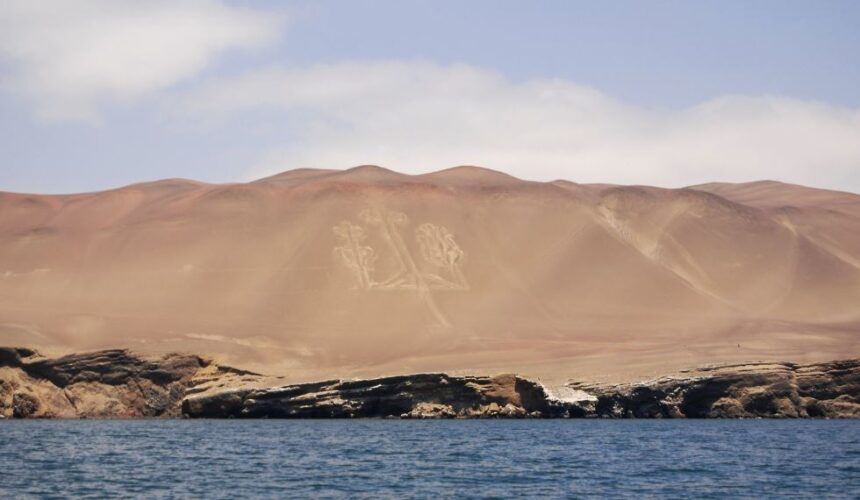
The Candelabra of the Andes is one of those rare mysteries that instantly captures your imagination the moment you hear about it. Etched into the sandy hillside of Peru’s coastal desert, this massive geoglyph stretches across the landscape with an almost surreal presence. From a distance, it looks like a giant candlestick or a trident, standing boldly against the barren terrain as if it were meant to send a message across time.
- The Geographic Setting of the Candelabra of the Andes
- Physical Characteristics and Design
- Historical Context and Possible Origins
- Theories About Its Purpose
- Connection to Other Geoglyphs
- The Role of the Environment in Preservation
- Cultural Significance and Symbolism
- Archaeological Studies and Discoveries
- Tourism and Modern-Day Interest
- Comparisons With Ancient Symbols
- Myths and Speculations
- The Importance of Preservation
- Lessons From the Candelabra of the Andes
- The Enduring Mystery
- The Visual Impact of the Candelabra of the Andes
- The Effort Behind Its Creation
- Symbolism and Interpretations Across Cultures
- The Role of Oral Traditions
- The Influence of the Landscape
- The Mystery of Its Alignment
- The Emotional Response It Evokes
- The Intersection of Science and Mystery
- The Impact of Modern Technology
- Preserving the Integrity of the Site
- The Role of Curiosity in Keeping It Alive
- A Symbol That Defies Time
- The Endless Search for Answers
- Final Reflection on Its Legacy
- Final Thoughts on the Candelabra of the Andes
What makes the Candelabra of the Andes so fascinating is not just its size or shape, but the questions it raises. Who created it? Why was it made? And how has it survived for so long in such a harsh environment? Unlike many ancient relics that come with detailed historical records, this geoglyph remains largely unexplained, making it one of the most intriguing symbols in South America.
The Geographic Setting of the Candelabra of the Andes
The Candelabra of the Andes is located on the northern face of the Paracas Peninsula in Peru. This region is known for its dry climate, strong winds, and expansive desert landscapes. The geoglyph is carved directly into the sandy slope, facing the Pacific Ocean, which makes it visible from miles away, especially for those approaching by sea.
The location itself is a key part of the mystery. The fact that the Candelabra of the Andes can be seen clearly from the ocean suggests that it may have been intended for sailors or travelers navigating the coastline. The desert conditions have also played a significant role in preserving the geoglyph, as the lack of rainfall has prevented erosion that might otherwise have erased it long ago.
Physical Characteristics and Design
The design of the Candelabra of the Andes is both simple and striking. It consists of a central vertical line with two symmetrical branches extending outward, creating a shape that resembles a candlestick or trident. The lines are deeply etched into the ground, ensuring that the figure remains visible even after centuries.
The scale of the geoglyph is impressive. It spans a large area, making it easily recognizable from a distance. The depth of the carvings suggests that considerable effort went into its creation, indicating that it held significant importance for the people who made it. Despite its simplicity, the design has sparked countless interpretations over the years.
Historical Context and Possible Origins
One of the biggest challenges in understanding the Candelabra of the Andes is determining its origin. While there is no definitive answer, many researchers believe it was created by the Paracas culture, an ancient civilization that thrived in the region long before the rise of the Inca Empire.
The Paracas people were known for their advanced textile work and unique burial practices, but their connection to the Candelabra of the Andes remains speculative. Some theories suggest that the geoglyph may have had ceremonial or religious significance, possibly serving as a symbol of power or protection.
Theories About Its Purpose
Over the years, numerous theories have been proposed to explain the purpose of the Candelabra of the Andes. One popular idea is that it served as a navigational aid for sailors. Its visibility from the ocean supports this theory, as it could have acted as a landmark for those traveling along the coast.
Another theory suggests that the geoglyph had religious or spiritual significance. The shape of the Candelabra of the Andes has been compared to various symbols, including sacred plants and mythological motifs. Some even believe it was a representation of a deity or a symbol used in rituals.
Connection to Other Geoglyphs
The Candelabra of the Andes is often compared to the famous Nazca Lines, another set of geoglyphs located in Peru. While the two share similarities in terms of scale and mystery, they also have notable differences.
Unlike the Nazca Lines, which feature a wide variety of shapes and figures, the Candelabra of the Andes is a single, distinct design. Its coastal location also sets it apart, as most other geoglyphs in the region are found inland. These differences have led some researchers to believe that it served a unique purpose.
The Role of the Environment in Preservation
One of the reasons the Candelabra of the Andes has survived for so long is the environment in which it is located. The arid climate of the Paracas Peninsula means that there is very little rainfall to erode the geoglyph.
Additionally, the sandy soil helps maintain the visibility of the lines. Wind patterns in the area tend to reinforce the grooves rather than fill them in, which has contributed to the geoglyph’s remarkable preservation. This natural protection has allowed the Candelabra of the Andes to remain largely unchanged over time.
Cultural Significance and Symbolism
The symbolism of the Candelabra of the Andes is still a topic of debate. Some interpretations link it to religious beliefs, suggesting that it may have represented a sacred symbol or a connection to the spiritual world.
Others see it as a marker of identity or territory, possibly used to signify the presence of a particular group or culture. Regardless of its original meaning, the Candelabra of the Andes has become an important cultural icon, representing the rich history and mystery of the region.
Archaeological Studies and Discoveries
Archaeologists have conducted various studies to learn more about the Candelabra of the Andes, but many questions remain unanswered. Excavations in the surrounding area have uncovered artifacts that provide some context, but they have not definitively explained the purpose of the geoglyph.
Despite these challenges, ongoing research continues to shed light on the history of the region. Advances in technology, such as aerial imaging and remote sensing, have provided new insights into the structure and composition of the geoglyph.
Tourism and Modern-Day Interest
Today, the Candelabra of the Andes attracts visitors from around the world. Tourists often view it from boats traveling along the coast, as this provides the best perspective of the geoglyph.
The site has become a popular destination for those interested in history, archaeology, and mystery. Its enduring appeal lies in the fact that it still holds secrets waiting to be uncovered. The sense of wonder it inspires continues to draw people in.
Comparisons With Ancient Symbols
The Candelabra of the Andes has been compared to various symbols from different cultures. Some see similarities with tridents, while others draw connections to sacred plants or religious icons.
These comparisons highlight the universal nature of symbolic expression. Across cultures and time periods, humans have used visual symbols to convey meaning, and the Candelabra of the Andes is a powerful example of this tradition.
Myths and Speculations
Like many ancient mysteries, the Candelabra of the Andes has inspired its share of myths and speculation. Some theories venture into the realm of the extraordinary, suggesting connections to lost civilizations or even extraterrestrial influences.
While these ideas are often dismissed by scholars, they reflect the fascination that the geoglyph continues to generate. The lack of definitive answers leaves room for imagination, which is part of what makes the Candelabra of the Andes so compelling.
The Importance of Preservation
Preserving the Candelabra of the Andes is essential for future generations. As a unique cultural and historical site, it provides valuable insights into the past.
Efforts to protect the geoglyph focus on minimizing human impact and maintaining the natural conditions that have preserved it for so long. Responsible tourism and conservation initiatives play a crucial role in ensuring its survival.
Lessons From the Candelabra of the Andes
The Candelabra of the Andes teaches us about the ingenuity and creativity of ancient civilizations. It reminds us that even without modern technology, people were capable of creating impressive and enduring works.
It also highlights the importance of curiosity and exploration. The questions surrounding the geoglyph encourage us to seek knowledge and understand the world around us. In this way, the Candelabra of the Andes continues to inspire.
The Enduring Mystery
Despite years of research and study, the Candelabra of the Andes remains an enigma. Its purpose, meaning, and origins are still not fully understood, and this uncertainty is part of its charm.
The mystery invites us to imagine, to question, and to explore. It serves as a reminder that not everything in the world has a clear explanation, and sometimes, the unknown is what makes something truly remarkable.
The Visual Impact of the Candelabra of the Andes
There is something undeniably powerful about seeing the Candelabra of the Andes for the first time. Whether viewed from a boat along the coastline or from an aerial perspective, the sheer scale and clarity of the geoglyph leave a lasting impression. It is not just a design carved into the earth—it feels intentional, bold, and almost communicative, as if it were meant to be seen and remembered.
The contrast between the pale desert sand and the deep grooves of the carving enhances its visibility. Even from a distance, the shape stands out with remarkable precision. This visual dominance is part of what has kept the Candelabra of the Andes relevant for centuries. It captures attention in a way that few ancient creations can, blending simplicity with grandeur in a uniquely striking manner.
The Effort Behind Its Creation
Creating something as large and precise as the Candelabra of the Andes would have required significant effort and planning. While the tools used by its creators were likely simple, the execution suggests a high level of organization and coordination. The lines are not random; they are deliberate and consistent, indicating a clear vision.
The process likely involved removing layers of surface material to reveal lighter sand beneath. This technique, while straightforward, demands time and precision, especially on such a large scale. The fact that the Candelabra of the Andes has maintained its form for so long speaks to the skill and dedication of those who created it. It was not a casual project—it was something that mattered deeply.
Symbolism and Interpretations Across Cultures
The Candelabra of the Andes has inspired a wide range of interpretations, many of which vary depending on cultural perspective. Some see it as a representation of a trident, which in various traditions is associated with power, authority, or divine influence. Others interpret it as a symbolic plant, possibly linked to ritual or medicinal use.
These interpretations highlight how symbols can transcend their original context. The meaning of the Candelabra of the Andes may have evolved over time, influenced by different cultures and belief systems. This adaptability is part of what keeps the mystery alive. Each new perspective adds another layer to its story, making it a truly dynamic piece of history.
The Role of Oral Traditions
While written records about the Candelabra of the Andes are scarce, oral traditions may have played a role in preserving its significance. Ancient cultures often relied on storytelling to pass down knowledge, and it is possible that the meaning of the geoglyph was once well understood within the community.
Over time, as cultures changed and generations passed, these stories may have been lost or transformed. What remains is the physical symbol, standing as a silent reminder of a narrative that once existed. This gap between past and present adds to the intrigue of the Candelabra of the Andes, inviting speculation and curiosity.
The Influence of the Landscape
The surrounding landscape plays a crucial role in how the Candelabra of the Andes is perceived. The vast, open desert creates a sense of isolation that enhances the geoglyph’s impact. There are no distractions—just the symbol and the natural environment, working together to create a powerful visual experience.
The proximity to the ocean adds another dimension. The idea that the Candelabra of the Andes was designed to be seen from the sea suggests a connection between land and water. This interplay between elements may have held symbolic meaning, reflecting the relationship between the people who created it and their environment.
The Mystery of Its Alignment
One of the more intriguing aspects of the Candelabra of the Andes is its alignment. Some researchers have speculated that its orientation may have been intentional, possibly linked to celestial events or geographic markers. While there is no definitive evidence to support these claims, the idea adds another layer of complexity to the mystery.
Ancient civilizations often incorporated astronomical knowledge into their constructions, and it is not unreasonable to consider that the Candelabra of the Andes might follow a similar pattern. Even if the alignment is coincidental, the possibility invites further exploration and keeps the conversation alive.
The Emotional Response It Evokes
Beyond its historical and cultural significance, the Candelabra of the Andes evokes a strong emotional response. There is a sense of wonder that comes from encountering something so ancient and unexplained. It reminds us of the vastness of human history and the many stories that remain untold.
For some, it sparks curiosity and a desire to learn more. For others, it inspires a sense of humility, recognizing how little we truly know about the past. This emotional connection is part of what makes the Candelabra of the Andes so enduring. It is not just an object of study—it is an experience.
The Intersection of Science and Mystery
The study of the Candelabra of the Andes sits at the intersection of science and mystery. Archaeologists and researchers use modern tools and methods to analyze the geoglyph, seeking clues about its origin and purpose. At the same time, the lack of definitive answers keeps it firmly in the realm of mystery.
This balance is what makes it so compelling. Scientific inquiry provides structure and evidence, while the unanswered questions leave room for imagination. The Candelabra of the Andes embodies this duality, serving as both a subject of research and a source of wonder.
The Impact of Modern Technology
Advancements in technology have opened new possibilities for studying the Candelabra of the Andes. Aerial photography, satellite imaging, and digital mapping have allowed researchers to examine the geoglyph in greater detail than ever before.
These tools have revealed subtle features that might not be visible from the ground, providing new insights into its construction and preservation. At the same time, technology has made it more accessible to the public, allowing people around the world to explore the Candelabra of the Andes without visiting in person.
Preserving the Integrity of the Site
As interest in the Candelabra of the Andes continues to grow, preserving its integrity becomes increasingly important. Human activity, if not managed carefully, can pose a threat to the geoglyph. Even minor disturbances can have lasting effects on such a delicate structure.
Conservation efforts focus on maintaining the natural conditions that have preserved the geoglyph for centuries. This includes regulating tourism and raising awareness about the importance of protecting cultural heritage. The goal is to ensure that the Candelabra of the Andes remains intact for future generations to study and appreciate.
The Role of Curiosity in Keeping It Alive
Curiosity is a powerful force, and it plays a key role in the continued fascination with the Candelabra of the Andes. The unanswered questions surrounding the geoglyph invite exploration and discussion, keeping it relevant in modern times.
Each new generation brings fresh perspectives and ideas, contributing to the ongoing dialogue. This collective curiosity ensures that the Candelabra of the Andes remains more than just a historical artifact—it becomes a living mystery that continues to evolve.
A Symbol That Defies Time
The Candelabra of the Andes has endured for centuries, resisting the forces of nature and the passage of time. Its survival is a testament to both the environment and the craftsmanship of its creators.
What makes it truly remarkable is its ability to remain relevant. Despite being created in a distant past, it continues to capture the imagination of people today. This timeless quality is part of what sets the Candelabra of the Andes apart from other ancient creations.
The Endless Search for Answers
The quest to understand the Candelabra of the Andes is ongoing. Researchers, historians, and enthusiasts continue to study it, each hoping to uncover new clues. While some progress has been made, many questions remain unanswered.
This ongoing search is part of the geoglyph’s appeal. It reminds us that discovery is a continuous process, and that there is always more to learn. The Candelabra of the Andes stands as a challenge to our understanding, encouraging us to keep exploring.
Final Reflection on Its Legacy
The legacy of the Candelabra of the Andes is one of mystery, creativity, and endurance. It is a symbol that transcends its physical form, representing the curiosity and ingenuity of humanity.
Final Thoughts on the Candelabra of the Andes
The Candelabra of the Andes stands as a testament to the enduring power of human expression. It is a symbol of mystery, creativity, and resilience, etched into the desert as a silent witness to history.
Whether it was a navigational aid, a religious symbol, or something entirely different, its impact is undeniable. The Candelabra of the Andes continues to captivate and inspire, reminding us of the endless possibilities of human imagination and the mysteries that still await discovery.