In a world where headlines flash by in seconds and social media trends fade even faster, there’s one form of writing that continues to hold power — literary journalism. This unique genre blends the factual foundation of traditional reporting with the creative, emotional depth of literature. If you’ve ever read a nonfiction story that felt like a novel — immersive, descriptive, and full of human insight — you’ve already experienced literary journalism in action.
- The True Meaning of Literary Journalism
- The Roots of Literary Journalism
- The Defining Features of Literary Journalism
- Truman Capote’s “In Cold Blood”: A Classic of Literary Journalism
- Joan Didion’s “The White Album”: The Art of Observation
- Tom Wolfe’s “The Electric Kool-Aid Acid Test”: A Journey into Counterculture
- Gay Talese’s “Frank Sinatra Has a Cold”: The Power of Presence
- Hunter S. Thompson’s Gonzo Journalism
- The Emotional Core of Literary Journalism
- Modern Literary Journalism: Evolving with Time
- Why Literary Journalism Still Matters Today
- How to Write Literary Journalism Yourself
- Famous Literary Journalism Examples That Shaped the Genre
- The Future of Literary Journalism
- Conclusion: The Enduring Power of Literary Journalism
- The Relationship Between Truth and Imagination
- How Technology Is Transforming Literary Journalism
- The Influence of Literary Journalism on Other Media
- Why Readers Still Crave Literary Journalism
- The Ethical Responsibility in Literary Journalism
- The Educational Value of Literary Journalism
- Final Thoughts: The Endless Relevance of Literary Journalism
When people search for literary journalism examples, they’re not just looking for titles or authors; they’re looking to understand how truth can be told beautifully. This style of writing captures reality with the rhythm of storytelling. It’s the place where the journalist becomes both a witness and an artist, weaving narratives that inform, move, and resonate long after the last word. Let’s explore this timeless craft, its origins, its essence, and the finest literary journalism examples that changed the way we see the world.
The True Meaning of Literary Journalism
Before diving into the best literary journalism examples, it’s essential to understand what the term actually means. Literary journalism isn’t about fictionalizing reality — it’s about bringing reality to life using the techniques of fiction. Writers in this genre focus on character development, vivid description, and emotional tone while maintaining the integrity of factual storytelling. The result? A narrative that’s both truthful and unforgettable.
Unlike standard reporting, which focuses on facts, dates, and sources, literary journalism dives deep into experiences. It invites readers to feel the story, not just read it. This writing style is sometimes called narrative nonfiction or creative nonfiction, and its purpose is to turn information into human stories that stick in the reader’s mind. When you think of literary journalism examples, think of pieces that read like short stories — only every event, every detail, and every person is real.
The Roots of Literary Journalism
To fully appreciate the best literary journalism examples, it’s worth tracing the genre back to its roots. Although the term gained popularity in the twentieth century, the practice itself began much earlier. Some literary historians point to writers like Daniel Defoe, who in the 18th century blurred the lines between factual reporting and imaginative storytelling. But it wasn’t until the mid-1900s that literary journalism truly found its modern identity.
The 1960s and 70s brought a revolution known as the New Journalism movement. Writers like Tom Wolfe, Truman Capote, Joan Didion, and Gay Talese began crafting long-form stories that read like novels but were meticulously researched and grounded in reality. Their goal was to transform journalism from a cold recitation of events into a vivid experience — to show, not just tell. These trailblazers are often cited as classic literary journalism examples because they elevated nonfiction into art.
The Defining Features of Literary Journalism
When we talk about literary journalism examples, certain defining features make them stand out. This genre doesn’t just tell the reader what happened; it shows how it felt. The voice is human, the scenes are cinematic, and the emotions are tangible. Here’s what sets it apart:
Deep Characterization:
Literary journalism zooms in on people rather than events. It treats subjects as full-fledged characters with emotions, motives, and contradictions. The journalist spends time observing, interviewing, and understanding their world before writing.
Scene-Based Structure:
Instead of presenting information as bullet points or summaries, literary journalism unfolds through scenes — moments that capture tension, dialogue, and sensory detail. It feels almost like reading fiction.
Emotional Truth:
Even though every fact is verified, the writing focuses on emotional authenticity. It doesn’t just inform; it connects. This emotional depth is what makes literary journalism examples linger in readers’ minds.
Truman Capote’s “In Cold Blood”: A Classic of Literary Journalism
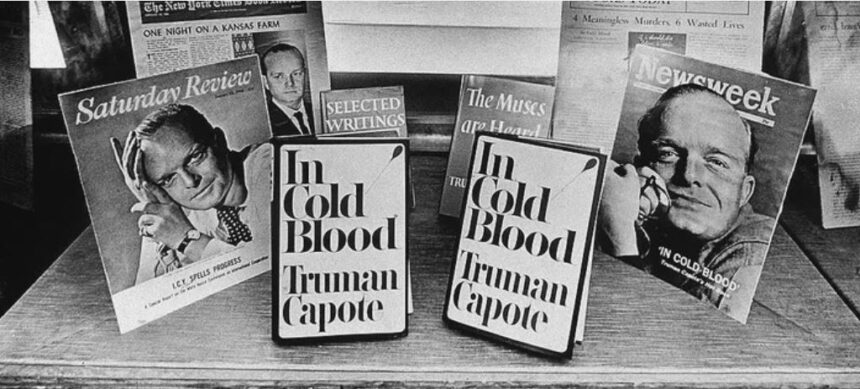
No discussion of literary journalism examples would be complete without Truman Capote’s “In Cold Blood.” This book is widely considered one of the first modern masterpieces of the genre. Published in 1966, it tells the true story of a brutal murder in a small Kansas town. But instead of delivering a dry, procedural account, Capote turned it into a deeply human story about violence, morality, and the American psyche.
Capote spent six years researching and interviewing the real people involved — from investigators to the murderers themselves. His narrative technique gave readers a novel-like experience, complete with tension, inner monologue, and atmosphere. “In Cold Blood” showed the world that journalism could have the emotional power of fiction without sacrificing factual truth. Today, it remains one of the most studied literary journalism examples in history.
Joan Didion’s “The White Album”: The Art of Observation
Another essential name in the world of literary journalism examples is Joan Didion. Her essay collection “The White Album” offers a raw, fragmented look into the turbulence of 1960s California. Didion doesn’t simply report what’s happening; she invites the reader inside her thoughts, doubts, and fears. This level of introspection was revolutionary for journalism at the time.
Didion’s writing style — precise, poetic, and psychologically insightful — transformed how writers approach nonfiction. She blurred the boundary between observer and participant, making her essays timeless examples of literary journalism’s emotional depth. Reading her work feels like listening to a friend confess their truth while showing you the world through a camera lens only she can hold.
Tom Wolfe’s “The Electric Kool-Aid Acid Test”: A Journey into Counterculture
When exploring literary journalism examples, one cannot ignore Tom Wolfe, a pioneer of the New Journalism movement. His book “The Electric Kool-Aid Acid Test” captures the psychedelic counterculture of the 1960s through the adventures of Ken Kesey and the Merry Pranksters. What makes Wolfe’s work so captivating is his wild, energetic prose — full of color, rhythm, and slang.
Wolfe didn’t just write about his subjects; he immersed himself in their world. He joined the group, traveled with them, and experienced their chaotic, experimental lifestyle firsthand. This kind of participatory journalism brought readers into the story as if they were right there, experiencing it themselves. His immersive technique makes The Electric Kool-Aid Acid Test one of the most exhilarating literary journalism examples ever written.
Gay Talese’s “Frank Sinatra Has a Cold”: The Power of Presence
Among the most celebrated literary journalism examples, Gay Talese’s 1966 Esquire profile “Frank Sinatra Has a Cold” stands tall. What’s astonishing about this piece is that Talese never actually interviewed Sinatra directly. Instead, he built the story entirely from observation and secondary interviews with the singer’s entourage and acquaintances.
This story became legendary because it perfectly captured Sinatra’s persona — his pride, vulnerability, and larger-than-life presence — without a single direct quote from him. Talese’s meticulous attention to detail and his cinematic storytelling made readers feel they truly knew Sinatra. This piece remains a textbook example of how literary journalism can reveal deep truths through subtle observation and narrative craft.
Hunter S. Thompson’s Gonzo Journalism
While exploring literary journalism examples, it’s impossible not to mention Hunter S. Thompson, the creator of Gonzo journalism — a subgenre where the reporter becomes part of the story. Thompson’s most famous work, “Fear and Loathing in Las Vegas,” blurs the line between reality and exaggeration. He writes in a fast, chaotic style that mirrors the madness of his experiences.
Thompson’s method broke every traditional rule of journalism. He embraced subjectivity, humor, and raw emotion to reveal truths that objective reporting often missed. His wild tone and fearless honesty made his writing unforgettable and influential, inspiring generations of journalists to take risks with narrative form. In the world of literary journalism examples, Thompson’s work remains one of the boldest.
The Emotional Core of Literary Journalism
One of the most striking aspects of literary journalism examples is their emotional resonance. These stories stay with readers not because of their headlines but because of how they make people feel. Literary journalists focus on human vulnerability, moral complexity, and the deeper implications behind events. Their writing goes beyond “what happened” to explore why it mattered.
This emotional core turns real-life narratives into shared human experiences. When readers encounter great literary journalism examples, they’re not just learning about the world — they’re connecting to it. The power of empathy, perspective, and emotion is what separates literary journalism from ordinary reporting.
Modern Literary Journalism: Evolving with Time
While the golden age of literary journalism began decades ago, the genre continues to thrive in modern forms. Today’s literary journalism examples can be found not only in books and magazines but also in digital storytelling, podcasts, and multimedia journalism. Platforms like The New Yorker, The Atlantic, and Narratively continue to publish immersive longform stories that uphold the tradition.
Contemporary writers like Jon Krakauer (Into the Wild), Susan Orlean (The Orchid Thief), and Adrian Nicole LeBlanc (Random Family) represent the modern face of literary journalism. They combine factual rigor with emotional storytelling to explore complex topics — from adventure to crime to social inequality. These writers prove that the essence of literary journalism remains timeless, even as formats evolve.
Why Literary Journalism Still Matters Today
In an era of clickbait and 10-second videos, one might wonder if longform literary journalism still matters. The truth is, it’s more essential than ever. Readers are craving authenticity and depth. They want to understand people’s lives, not just read about events. That’s why the best literary journalism examples continue to resonate — they offer meaning, context, and connection.
This form of writing also builds trust. While the internet is flooded with misinformation, literary journalism relies on thorough research and human observation. It shows that storytelling and truth don’t have to be opposites; they can coexist beautifully. In that sense, literary journalism isn’t just a genre — it’s a reminder that words still have the power to reveal truth with heart.
How to Write Literary Journalism Yourself
If reading literary journalism examples inspires you to write your own, start by focusing on immersion. Spend time with your subject, observe their environment, and notice the small details others overlook. The best literary journalists are great listeners and patient observers. They understand that reality itself has its own poetry — all it needs is the right words.
Next, embrace narrative techniques like scene-building, dialogue, and pacing. These are the same tools novelists use, but in literary journalism, they serve truth rather than fiction. Above all, write with empathy. Your goal isn’t just to report facts but to help readers experience them emotionally. The balance between accuracy and artistry is where true literary journalism shines.
Famous Literary Journalism Examples That Shaped the Genre
Let’s look at a few timeless literary journalism examples that continue to influence writers today:
“In Cold Blood” by Truman Capote – A haunting, meticulously researched true-crime narrative.
“The Electric Kool-Aid Acid Test” by Tom Wolfe – A vibrant exploration of 1960s counterculture.
“The White Album” by Joan Didion – A reflective look into personal and social chaos.
“Frank Sinatra Has a Cold” by Gay Talese – A masterclass in observation and subtlety.
“Fear and Loathing in Las Vegas” by Hunter S. Thompson – A wild, immersive ride through Gonzo journalism.
Each of these literary journalism examples showcases a different voice, theme, and technique, proving that truth can be told in endlessly creative ways.
The Future of Literary Journalism
The future of literary journalism looks bright, even in a digital-first world. With online platforms embracing longform storytelling, there’s a growing audience for immersive narratives that blend fact and art. Modern literary journalism examples often appear as interactive features, combining text, visuals, and sound to create multisensory experiences.
New voices from around the world are also reshaping the genre, offering perspectives that were once overlooked. This diversity of voices ensures that literary journalism remains not only alive but evolving. Whether told through essays, documentaries, or podcasts, the heart of literary journalism — empathy, depth, and truth — continues to thrive.
Conclusion: The Enduring Power of Literary Journalism
In the end, literary journalism examples remind us that truth is not only something we read — it’s something we feel. These stories challenge us to slow down, listen, and see the world through someone else’s eyes. From Capote’s haunting investigations to Didion’s introspective essays, every piece of literary journalism is a testament to the human need for understanding.
Literary journalism bridges the gap between fact and feeling, intellect and emotion. It’s where storytelling meets truth, and journalism becomes art. In a world hungry for authenticity, this genre remains a beacon of thoughtful, compassionate writing — one that proves facts can touch the soul just as deeply as fiction ever could.
Extended Reflections on Literary Journalism’s Cultural Significance
When looking deeper into literary journalism examples, one can see that this genre has done far more than simply merge reporting with storytelling — it has reshaped cultural understanding. Each powerful piece of literary journalism reflects not only the subject but also the society that produced it. These works serve as mirrors to human experience, revealing truths about power, politics, culture, and emotion.
In the twentieth century, literary journalism became a rebellion against impersonal reporting. It humanized news at a time when readers were growing numb to cold, objective facts. Today, that legacy continues as journalists and writers use narrative techniques to address modern issues such as climate change, migration, inequality, and technology. Every generation finds its own literary journalism examples that speak to its fears, hopes, and questions.
The importance of this genre lies in its ability to make the invisible visible. It amplifies unheard voices, documents everyday struggles, and transforms ordinary lives into extraordinary narratives. That’s what gives literary journalism examples their staying power — they are both storytelling and social commentary, art and activism, observation and empathy intertwined.
The Relationship Between Truth and Imagination
A fascinating aspect of literary journalism examples is the relationship between truth and imagination. Unlike fiction, literary journalism cannot invent events or characters. Yet, it must capture the deeper truth — emotional, psychological, and social — that lies beneath surface facts. The imagination here isn’t about fabrication; it’s about perception. It’s the journalist’s ability to see the unseen, to recognize patterns, and to express them through language that breathes.
Great literary journalists understand that facts alone rarely move hearts. It’s the interpretation, the rhythm, and the attention to human complexity that elevate their work. In this way, literary journalism examples demonstrate that imagination can serve truth rather than distort it. Through metaphor, tone, and narrative structure, these writers reveal more than statistics ever could.
This delicate balance is what makes literary journalism an enduring art form. It lives at the intersection of truth and creativity, proving that storytelling and accuracy are not enemies but partners in revealing the full spectrum of human reality.
How Technology Is Transforming Literary Journalism
In the digital era, literary journalism examples are no longer confined to printed pages. Technology has opened new spaces for narrative journalism to evolve — from interactive features on news websites to immersive multimedia essays that blend photography, audio, and video. These digital forms preserve the soul of literary journalism while expanding its reach.
Today’s journalists can use tools like virtual reality or podcasts to transport readers directly into a story. Imagine walking through a refugee camp via a virtual documentary or hearing firsthand voices from the front lines of environmental crises. These experiences represent the next generation of literary journalism examples, proving that digital media can deepen emotional engagement rather than dilute it.
Technology also democratizes the field. Independent writers and smaller publications can now publish longform stories without relying on large media houses. This shift allows more diversity of voices and topics, ensuring that literary journalism continues to thrive across cultures and perspectives.
The Influence of Literary Journalism on Other Media
The influence of literary journalism examples stretches far beyond the printed word. Its storytelling techniques have deeply shaped documentary filmmaking, podcasting, and even screenwriting. Many modern true-crime documentaries, for instance, follow the narrative blueprint of Capote’s In Cold Blood. They focus on character depth, moral tension, and atmosphere — all trademarks of literary journalism.
Podcasts like This American Life or Serial are modern descendants of this tradition. They combine rigorous reporting with narrative arcs that evoke emotion and suspense. Each episode functions as an audio version of the literary journalism examples found in magazines decades ago. The use of voice, sound design, and pacing turns nonfiction into a powerful emotional experience.
Even Hollywood owes a debt to literary journalism. Films such as Spotlight and The Post echo the commitment to truth and storytelling that define the genre. These cinematic interpretations demonstrate that literary journalism isn’t just a form of writing — it’s a philosophy of storytelling that crosses all mediums.
Why Readers Still Crave Literary Journalism
Despite the flood of short-form content today, readers are drawn to the depth and humanity of literary journalism examples. Quick headlines can inform, but they rarely inspire. In contrast, literary journalism invites immersion — it offers a world to step into, characters to empathize with, and truths to ponder long after the story ends.
This craving for depth is why longform storytelling remains valuable in a digital age. People want to understand not only what happened but why it matters. Literary journalism satisfies that need by exploring causes, consequences, and emotions. It provides context in a world often stripped of nuance.
Moreover, the best literary journalism examples don’t just tell readers what to think — they invite them to feel and reflect. That participatory quality is what keeps the genre timeless. Whether read on paper or screens, these stories connect humanity across borders, experiences, and generations.
The Ethical Responsibility in Literary Journalism
With the creative freedom that literary journalism allows comes an enormous ethical responsibility. Writers who produce literary journalism examples must walk a fine line between storytelling and factual accuracy. Every quote, scene, and observation must be grounded in truth. The artistry lies in how it’s told, not in what’s invented.
The temptation to dramatize or manipulate facts for emotional effect is real — and this is where credibility can be lost. A good literary journalist verifies, corroborates, and honors the real people behind their narratives. The trust between reader and writer is sacred. If broken, even the most beautiful prose loses its power.
This ethical dimension is what separates authentic literary journalism examples from sensational storytelling. Great writers prove that honesty and artistry can coexist — that truth told beautifully is still truth.
The Educational Value of Literary Journalism
Beyond its artistic and emotional importance, literary journalism examples hold immense educational value. They serve as models for journalism students, writers, and readers alike, demonstrating how to merge fact with narrative skill. Reading literary journalism teaches not just about the world, but about how stories shape perception.
Students who study this genre learn the importance of empathy, patience, and observation. They understand that storytelling isn’t just about crafting sentences but about listening deeply. Literary journalism teaches that every life, no matter how ordinary, contains a story worth telling — if only someone takes the time to look.
In classrooms and workshops worldwide, literary journalism examples are used to train future journalists to go beyond surface-level coverage. They inspire a new generation to write with both accuracy and soul — qualities that the modern media landscape desperately needs.
Final Thoughts: The Endless Relevance of Literary Journalism
As we reach the end of this exploration, one truth stands out — literary journalism examples aren’t just lessons in writing; they’re lessons in humanity. They remind us that every story has a heartbeat, and every truth can be told with compassion. Whether it’s Capote chronicling a crime, Didion dissecting a generation, or a modern journalist uncovering global injustice, the spirit of literary journalism endures.
In an age dominated by speed and simplicity, this form of writing slows us down. It invites us to think, to care, to connect. It proves that journalism, when done with creativity and conscience, is one of the highest forms of art. The world will always need storytellers who can capture the truth in a way that moves hearts as much as minds — and that’s exactly what the best literary journalism examples continue to do.